

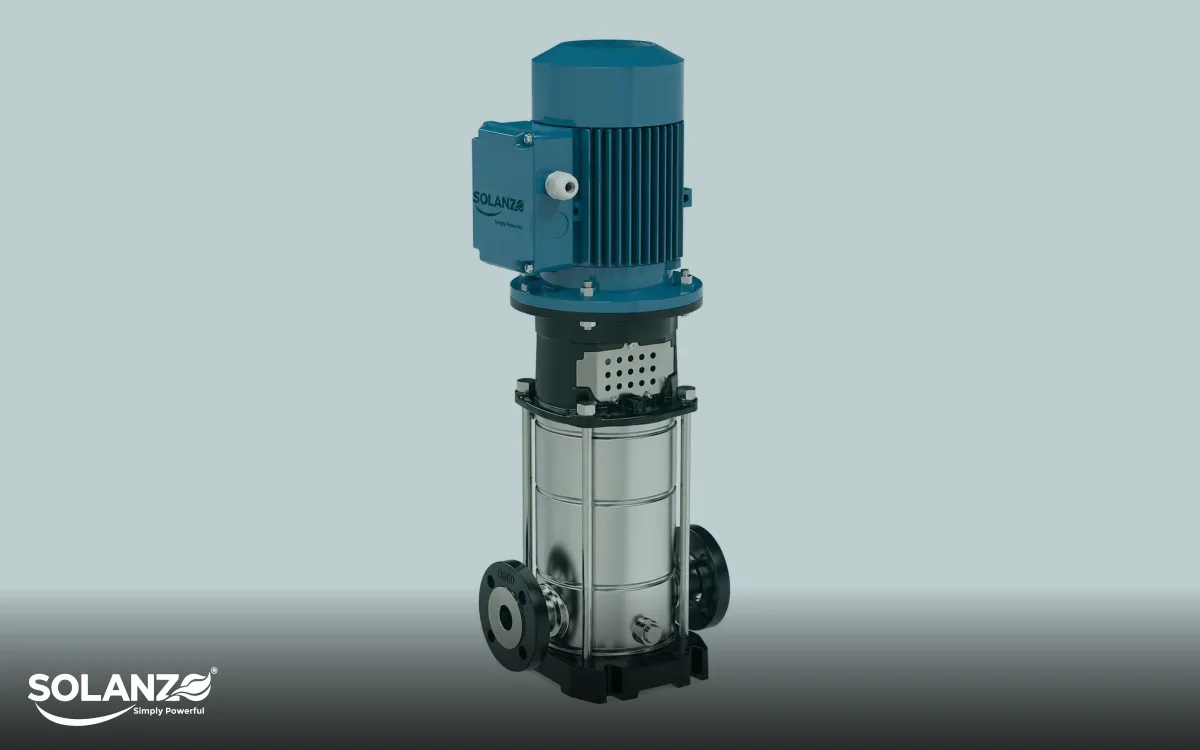
The same multistage hydraulics come in two packages: a tall column standing on the floor, or a horizontal barrel lying beside it. Customers often treat it as a styling choice. It is not; the layout changes footprint, maintenance and where the pump can physically sit.
Where vertical wins
- Floor space. A vertical in-line pump occupies a square metre where a horizontal skid needs three. In a tight plant room or a retrofit corner, that is often the whole argument.
- Suction conditions. The top-entry column keeps a flooded, favourable suction path, which is kinder on NPSH in marginal installations.
- In-line piping. Suction and discharge on the same axis drop neatly into a pipe run, which is why verticals dominate inline boosting duty.
Where horizontal wins
- Service access. Everything is at waist height: coupling, seals, motor. On a maintained site, faster service is real money over twenty years.
- Headroom. Basements with low ceilings simply cannot take a two-metre column.
- Headroom for repair too: pulling a vertical pump's stack needs clear space above, which is easy to forget at design time.
The honest default
Space tight and duty standard: vertical. Room to work and heavy service expected: horizontal. Both share the same hydraulic heart; you are choosing how the machine lives in your building, not how it pumps.