

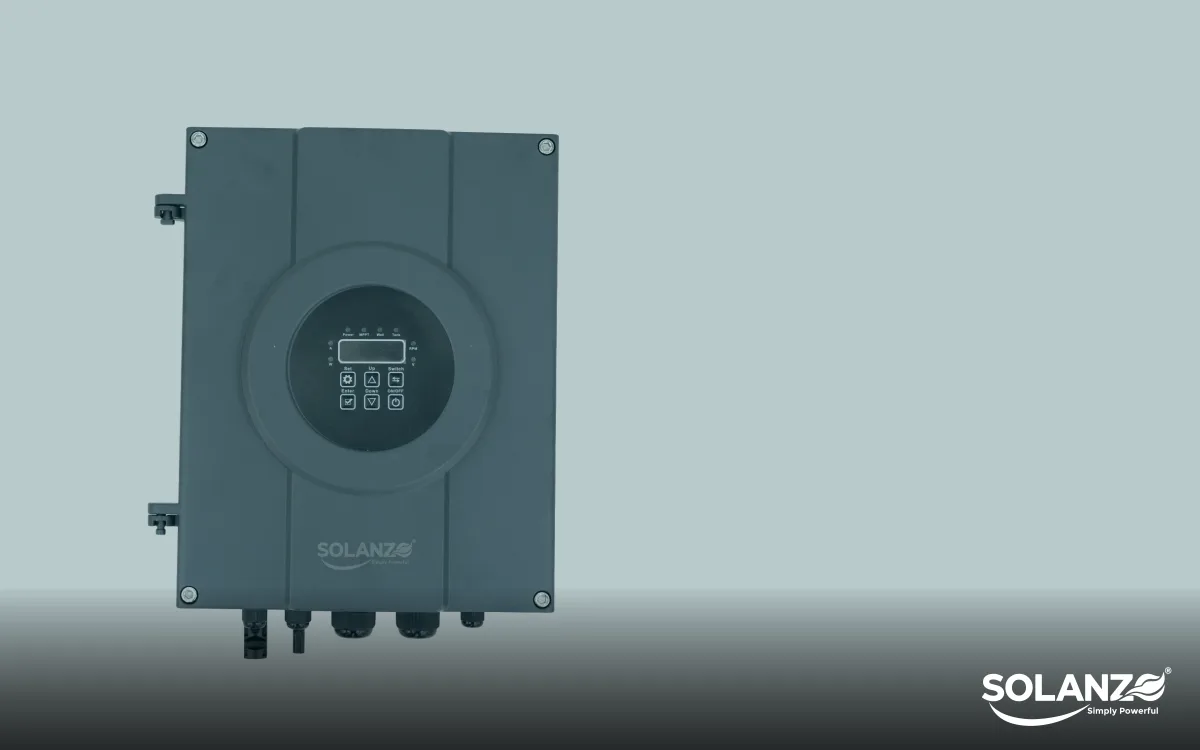
A solar pumping inverter and a standard variable frequency drive both feed an AC motor a variable frequency, and that is where the similarity ends. Specifying one where the other belongs is a mistake we see quoted into projects regularly.
What a standard VFD expects
A normal drive is built for the grid: stable AC in, rectified to a DC bus, inverted to the motor. It assumes the source never sags, never sleeps, and always delivers rated current. Feed it a solar array and it has no idea what to do when the sun fades.
What a solar inverter must do instead
- Harvest, not just convert. It tracks the array's maximum power point continuously, trading pump speed against available watts dozens of times a second.
- Run on a variable source. Its DC bus and control logic accept input that swings with cloud and dawn, slowing the pump gracefully instead of tripping on undervoltage.
- Protect the pump in both directions. Dry-run, over-temperature and flow protection are integrated with the solar logic: no light means slow or stopped, never damaged.
- Blend sources where needed. Hybrid-capable units hand off to grid or generator input when the array cannot cover demand.
The drive function is the same; the intelligence around it is not. On solar duty the inverter is not driving a motor, it is negotiating between a living power source and a mechanical load. That is why the product exists as a category of its own.