

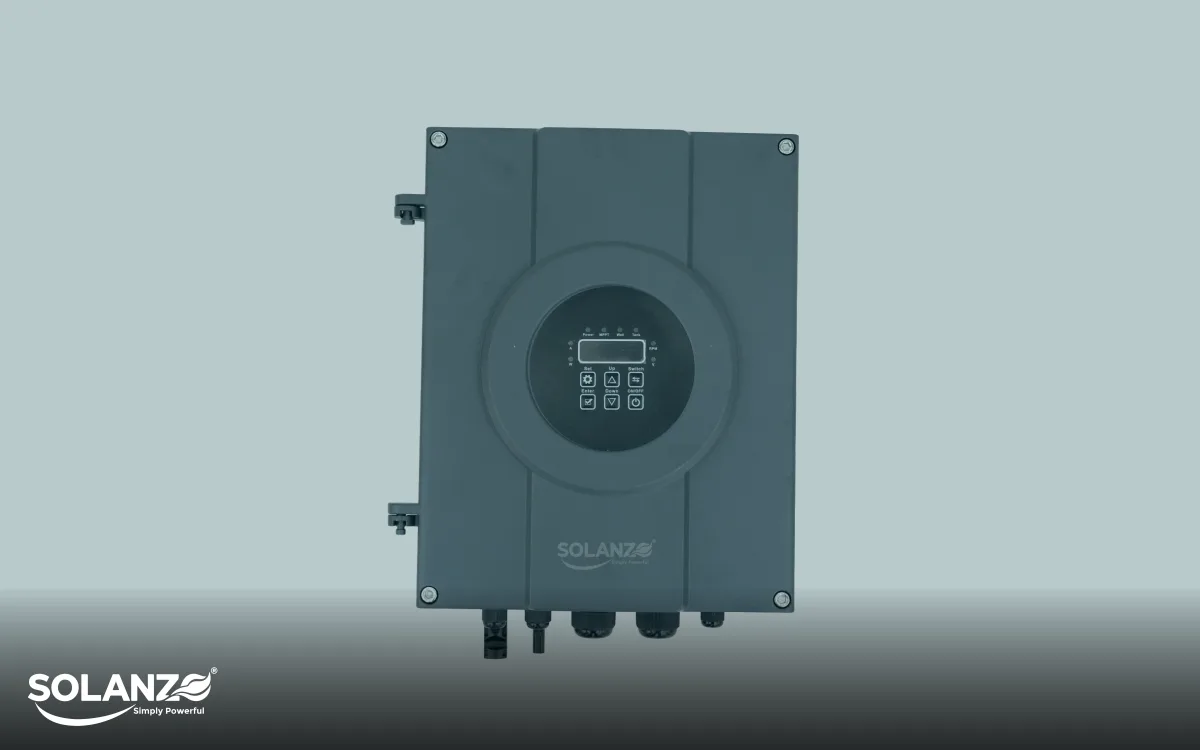
A borehole pump hangs at the end of a long electrical leash. The pump may be 40 metres down, but by the time the cable runs up the well, across the yard and to the panel, the motor is fed through 100 metres of copper. Size that copper too small and you have installed a very efficient motor-killer.
What voltage drop does
Resistance in the cable eats voltage along the run. A motor rated 230 V that actually receives 205 V does not produce less power politely; it pulls more current to compensate, runs hotter, and cooks its insulation over months. Worse is the start: inrush current is several times the running current, so a marginal cable that "works" at full speed can prevent the motor ever reaching speed at all.
The sizing logic
- Keep the drop under about 3 percent of supply voltage over the full run, measured at starting current, not running current.
- Long runs and deep wells push you to a larger cross-section faster than intuition suggests. When in doubt, go a size up.
- Do not forget the starting method: soft-start or variable-speed drives cut the inrush dramatically, which is one of their least-advertised benefits for long cable runs.
Copper is expensive; a burned-out submersible hauled up a borehole is more expensive. The cable is part of the pump. Budget for it like one.