

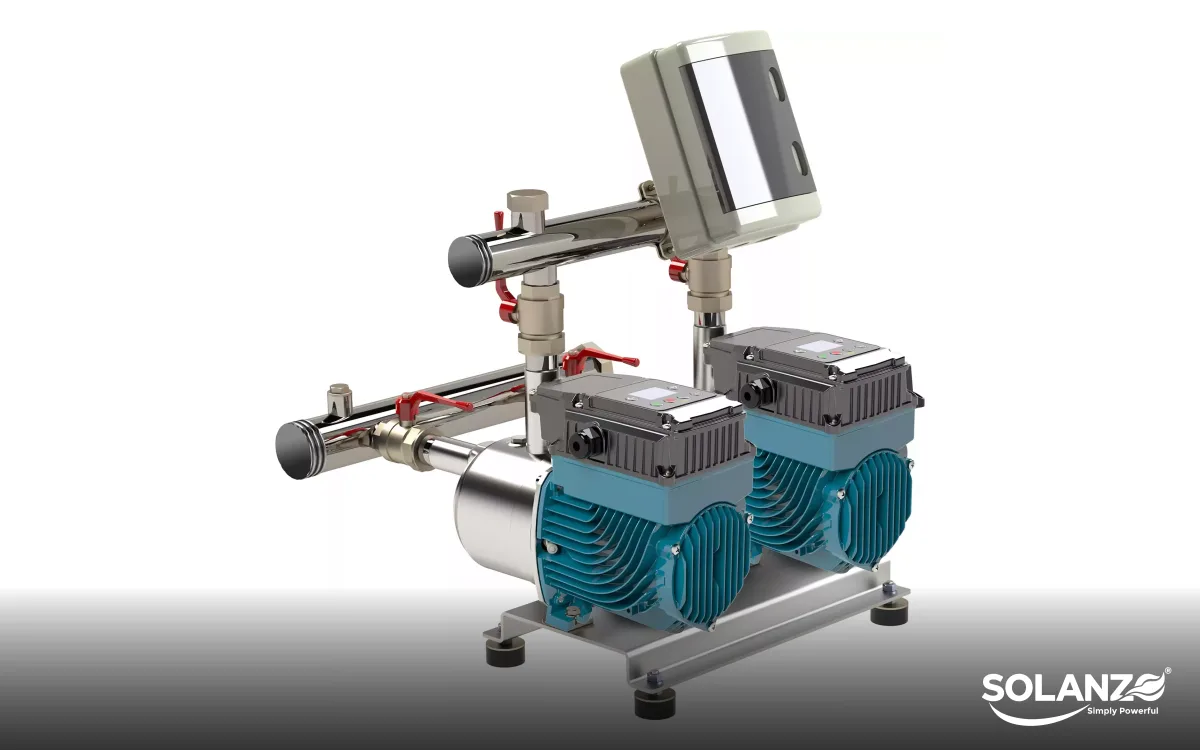
Look back through twenty-seven years of orders and a pattern emerges: the early ones list pump models, the recent ones describe problems. "Supply a farmhouse of fourteen people, two hectares of drip, source is a 60-metre well." The product page matters less than the answer.
Why the unit of sale changed
A pump is one component in a chain: source, storage, power, control, distribution. Selling the pump alone transfers the integration risk to the customer, and that is precisely the risk most customers are worst placed to carry. When the pump, the inverter and the protection are designed together, the failure modes between them disappear; designed separately, they are discovered on site.
What a system answer actually contains
- The pump, selected on the real duty point rather than the catalogue maximum.
- The power source: array, inverter, hybrid or grid, sized to the same duty.
- Storage and protection: tank capacity, dry-run and cycle protection, the parts that decide whether the system survives its first year.
- And the boring part that makes the rest work: commissioning data, documentation, spares.
We still manufacture pumps; that is the heart of what we do. But the business the market increasingly asks for is water, delivered reliably, by a system that someone else designed end to end. The pump inside it has to be excellent. The answer around it has to be complete.